By Gillian Gustar
Finding traces of The Good Soldier
My conviction that there is value in what I loosely call ‘field research’, by which I mean visiting locations with questions to follow up but also an openness to what you might notice, began with a trip to Germany in 2016.1 Part of that trip involved visiting Bad Nauheim in which a major part of The Good Soldier is set. Of course, whilst the novel begins in Bad Nauheim, it ends in the English home of the Ashburnhams, variously referred to as Bramshaw House, Bramshaw Manor and Bramshaw Teleragh,2 located in the area of Wiltshire that Andrew and I visited in 2025 (a trip covered in previous Society Blog articles in this series here and here).
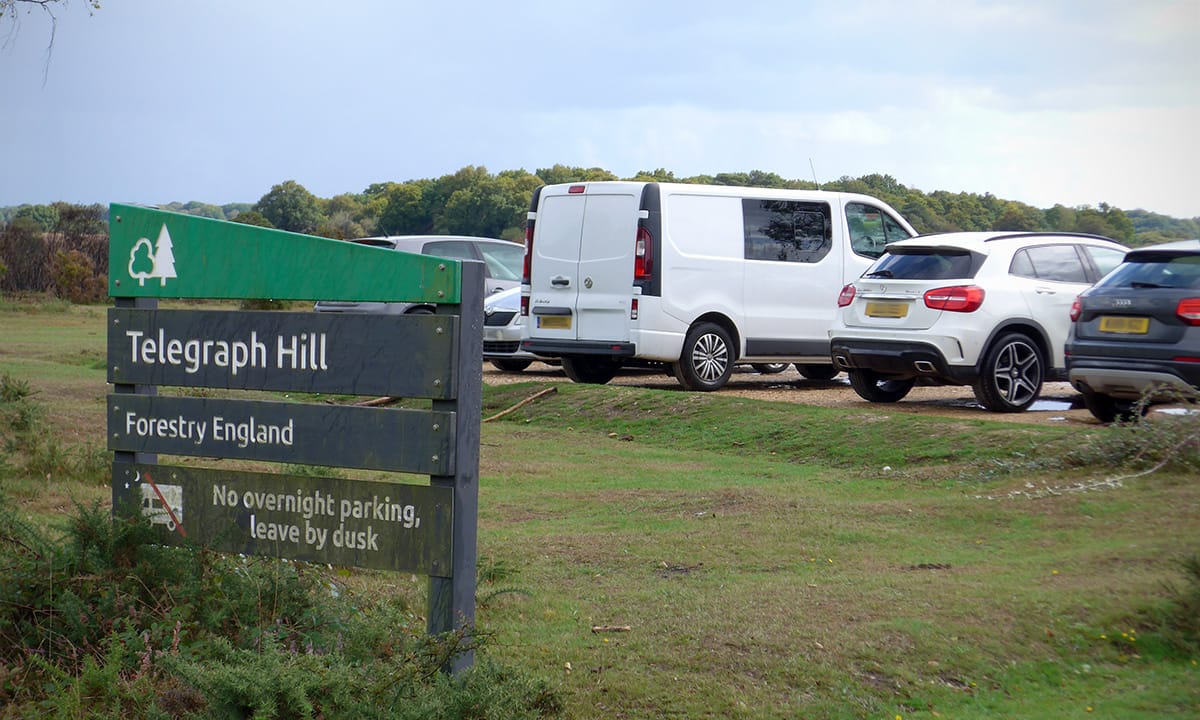
In a 2022 Society Blog article Andrew showed how the name of the house probably arises from a Telegraph station near the village of Bramshaw and a misprint on a 1902 map of the New Forest. He identified the “nearest large house to the real Bramshaw Telegraph,” now named Lyburn Park, and demonstrated that it is situated in a setting consistent with Ford’s descriptions in the novel. Yet, as Andrew points out, built in 1882, it lacks the heritage accorded to the fictional Bramshaw Manor. Its own heritage, explored in the second part of the article, offers some tantalising possibilities that it may have offered broader inspiration to Ford in crafting his novel, but as a model for the house which had been owned by Florence’s ancestors “for two centuries before the Ashburnhams came” it falls short.3
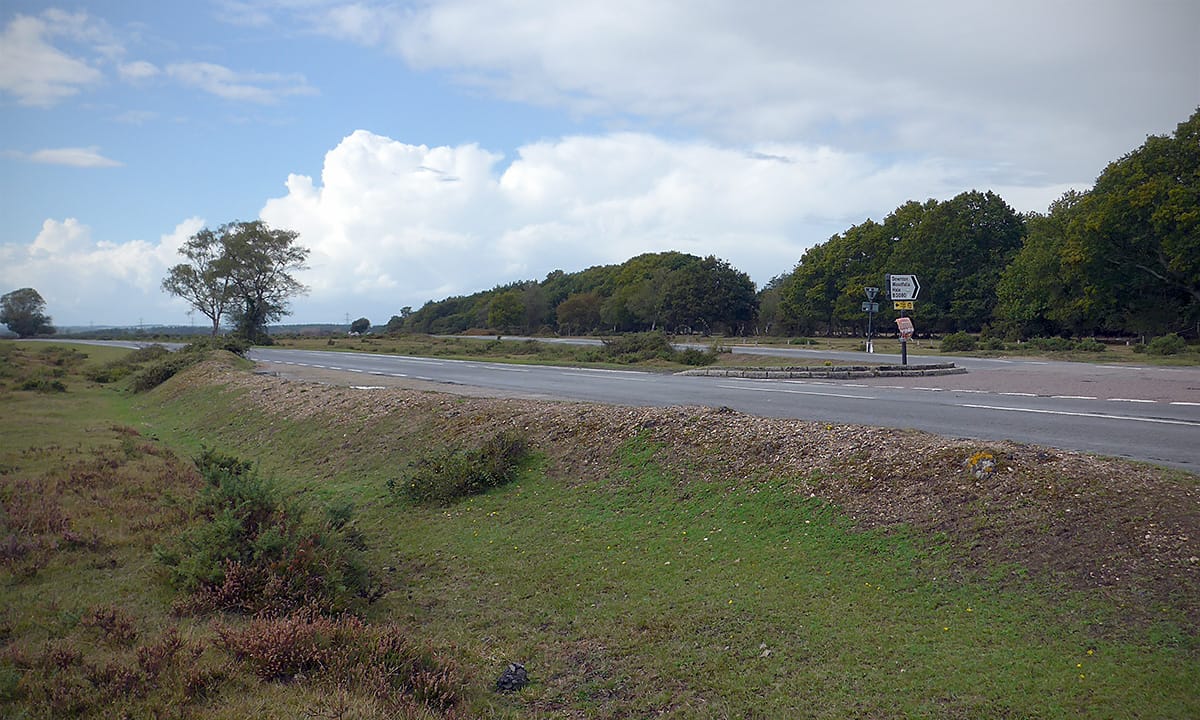
Nevertheless, we drove up to Bramshaw Telegraph, one of the highest points in the New Forest at 128 metres above sea level. It is an exposed spot now marked by a car park, viewpoint and an information board. The site of the Napoleonic telegraph station, long since removed, is on a narrow spit of greenery at the junction of two main roads.
Standing at this spot it was easy to envisage Dowell’s journey down from the “high, clear, windswept waste of the New Forest” to the house “in a little hollow” with “pine-woods on the fringe of the dip”.4 Indeed, when we drove down the lane alongside Lyburn Park it was not visible because of the woodland. There was nothing to undermine the idea that this was the location Ford had envisaged, but there was still the niggling question of whether house and location came together.
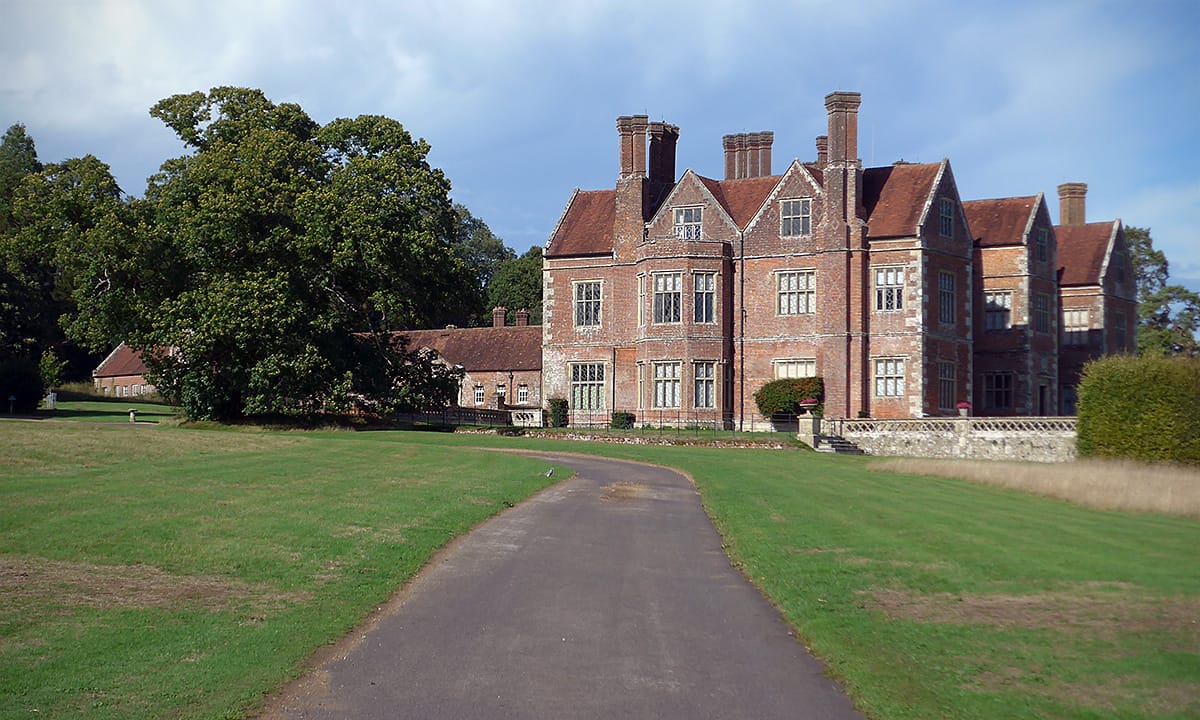
I want to suggest here that they do not, and that another building entirely may have influenced Ford’s creation of Bramshaw Manor. About three miles outside Fordingbridge, where Florence hoped to become “a county lady”,5 is Breamore House, an Elizabethan Manor completed in 1583.
It is the centre of an estate and the house is flanked by “pristine Forest” on one side and “grass parkland that stretches to the New Forest” on the other. When Dowell recalls Ashburnham gazing “upon the sunny fields of Bramshaw” and saying “All this is my land!” he conveys a similar sense of a home certainly fringed with woodland, but also a big estate with open vistas.6
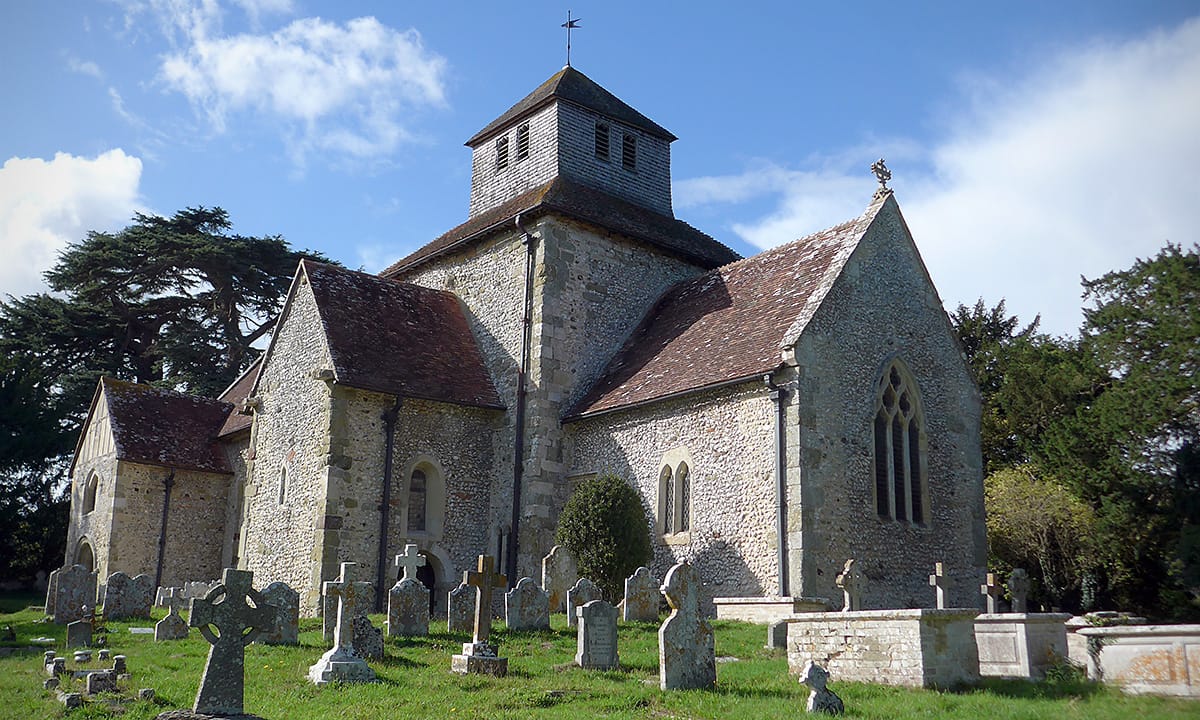
Two buildings which form part of the estate strengthen the idea that it may have provided some inspiration for Ford. A beautiful old Saxon church which stands close to the house perhaps seeded the idea of the Roman Catholic chapel Ashburnham wanted to build for Leonora.7
There is also a stable block behind the house just as Ford placed stables at which Ashburnham proposed to let a “young fellow called Selmes” keep the horse he had given to him, and where Dowell later left Ashburnham with his “little neat pen-knife”.8
Somewhat frustratingly, the house was closed on the day we visited so whether it has a “great big hall with oak floors”9 and a gallery above I cannot confirm. I could, of course, contact the current estate owners but that would take away the excuse for another trip to Fordingbridge! Nor can I say that Ford ever visited Breamore House, but well before he stayed in Fordingbridge with Violet Hunt in 1910, he had spent a lot of time in the general area and knew it well. It is perfectly possible that he had visited, or that he had simply read about it. It is, after all, part of the history of Fordingbridge much of which is captured in an excellent small local history museum.
The evidence I do have, however, suggests to me that Ford may have used the atmospheric location of Bramshaw Telegraph station and some features of this prominent local house to create the fictional home which is so central to The Good Soldier.
Click here for Part 4 of this series of articles…
All photographs by Andrew Gustar, reproduced with permission.
- See Gillian Gustar, ‘The Journal of a PhD Student: Following in Ford’s footsteps’, in Last Post – A Literary Journal from the Ford Madox Ford Society, Spring 2019 Vol. 1, No.2. pp. 109-117. ↩︎
- Ford Madox Ford, The Good Soldier, Norton Critical Edition (2012), pp. 24, 47, and 53 respectively. All further references to this edition. ↩︎
- Ford, The Good Soldier, p. 53 ↩︎
- Ford, The Good Soldier, pp. 21 and 73 ↩︎
- Ford, The Good Soldier, p. 65 ↩︎
- Ford, The Good Soldier, p. 26 ↩︎
- Ford, The Good Soldier, p. 96 ↩︎
- Ford, The Good Soldier, pp. 134 and 169 ↩︎
- Ford, The Good Soldier, p. 135 ↩︎