By Gillian Gustar
Whilst working towards my now completed PhD I was afforded the opportunity to contribute a regular column to Last Post. In the Spring 2019 edition I recounted the joys, and value, of retracing Ford’s footsteps around Bad Nauheim and the Rhine valley.1 In September last year, my husband Andrew and I repeated the experience with a visit to Wiltshire, spending a few days in the ‘real world’ settings of Ladies Whose Bright Eyes discussed in Andrew’s article, Mr. Sorrell’s Castles.2 We wanted to test the analysis he had done from maps by visiting key locations and walking some of the routes. Pleasingly, it held up. As many Ford followers may have less opportunity (or inclination) to potter around the English countryside, I thought it might be of interest to share some impressions and discoveries we made along the way in a series of short blog posts, of which this is the first.
Broad Chalke: Almost under the same roof
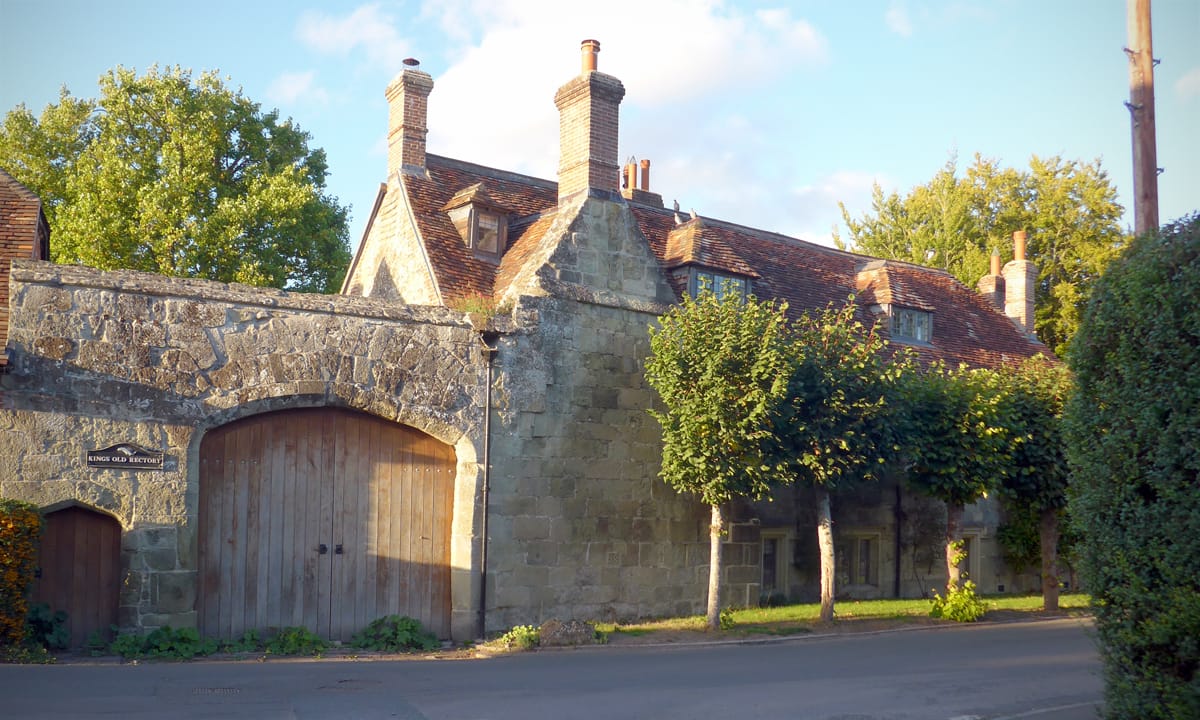
Almost unbelievably, we were able to rent a studio cottage in what may have been a wing of the Old Rectory in Broad Chalke, a place well known to Ford. Ford claimed to have seen “a good deal” of Maurice Henry Hewlett at his “beautiful mediaeval manor at Broad Chalke at a time when Hudson had his hiding hole in the valley behind”.3 I say that we were ‘almost’ under the same roof as Ford had been because it is not clear whether the long narrow building which now houses two holiday rentals is integral to or merely abuts the Old Rectory, but it is certainly owned by the current occupiers. The Rectory in the late afternoon sun led me to fancifully imagine Ford scribbling away behind that high garret window.
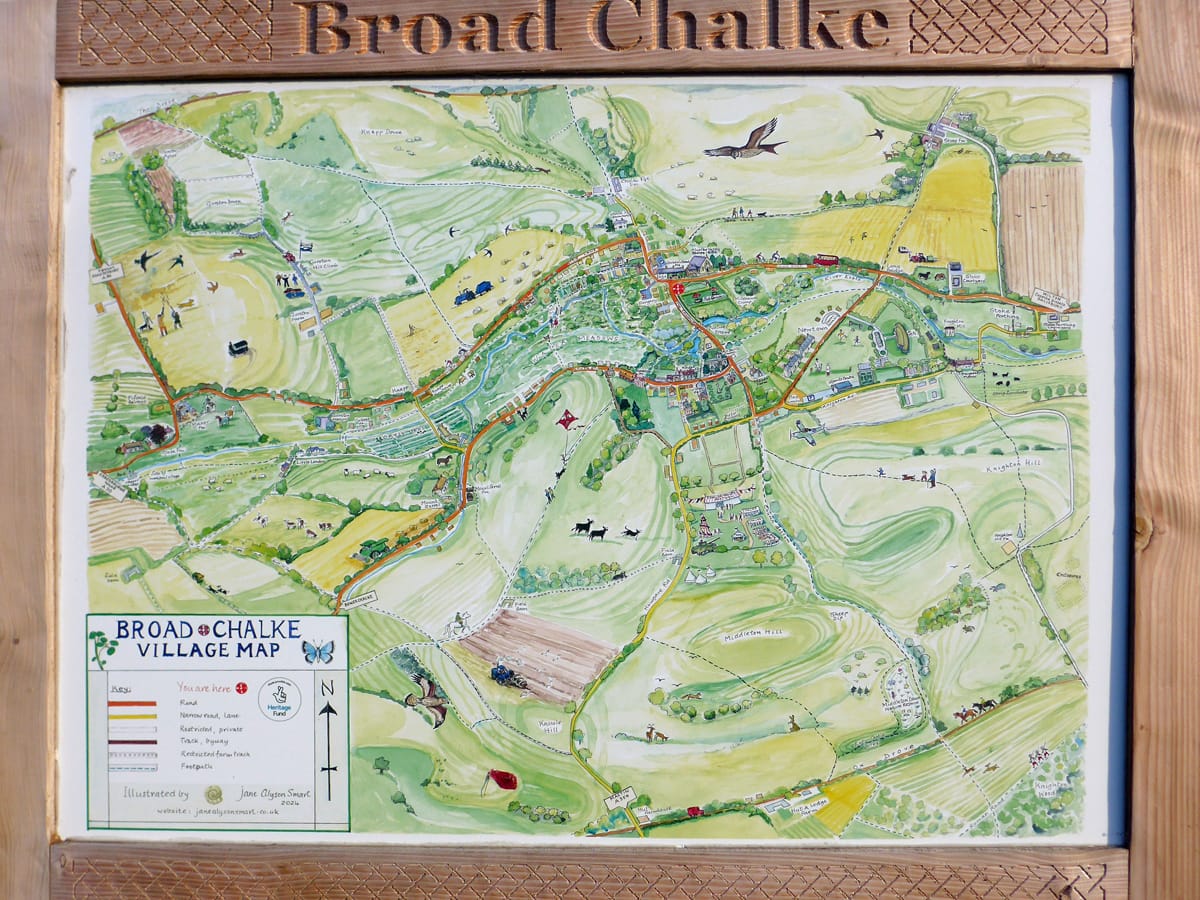
The village of Broad Chalke is part of the West Wiltshire Downs Area of Outstanding Natural Beauty meaning that it belongs in a protected, high value landscape subject to conservation regulations. The village map (below) shows it situated within an essentially rural landscape, despite its closeness to the busy A30. The painted and framed map seems designed for visitors not residents and reflects the careful conservation of the village.
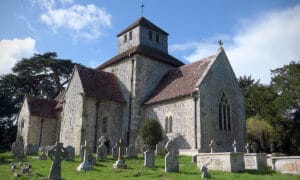
The Old Rectory flanks South Street, just beyond Old Saints Church, which dates back to the 13th and 14th century, and the Village Hall. Our first evening’s wanderings found us strolling the length of South Street to the farmhouse named Mount Sorrell at the western end of the village. Although we found the farmhouse, it had no name plate but two nearby beautiful, thatched cottages did: Sorrell Cottage and Mount Sorrell Cottage, shown in the photographs below.
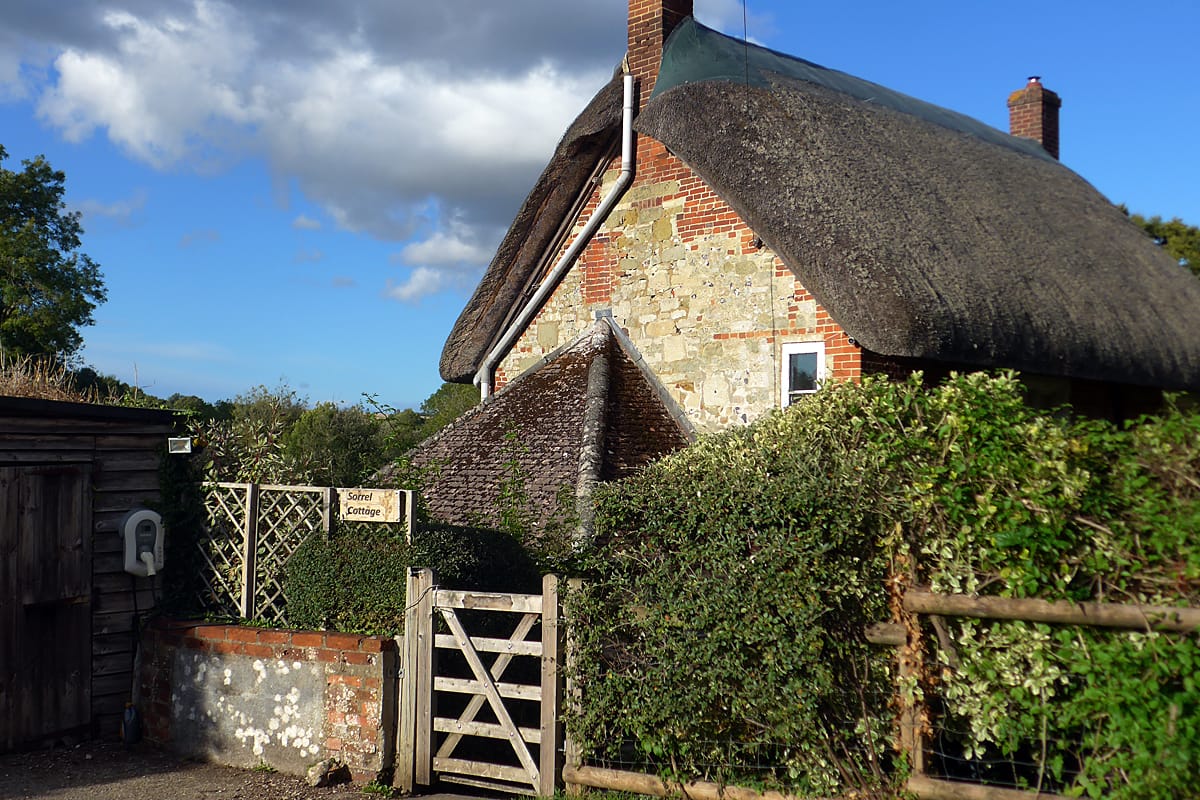
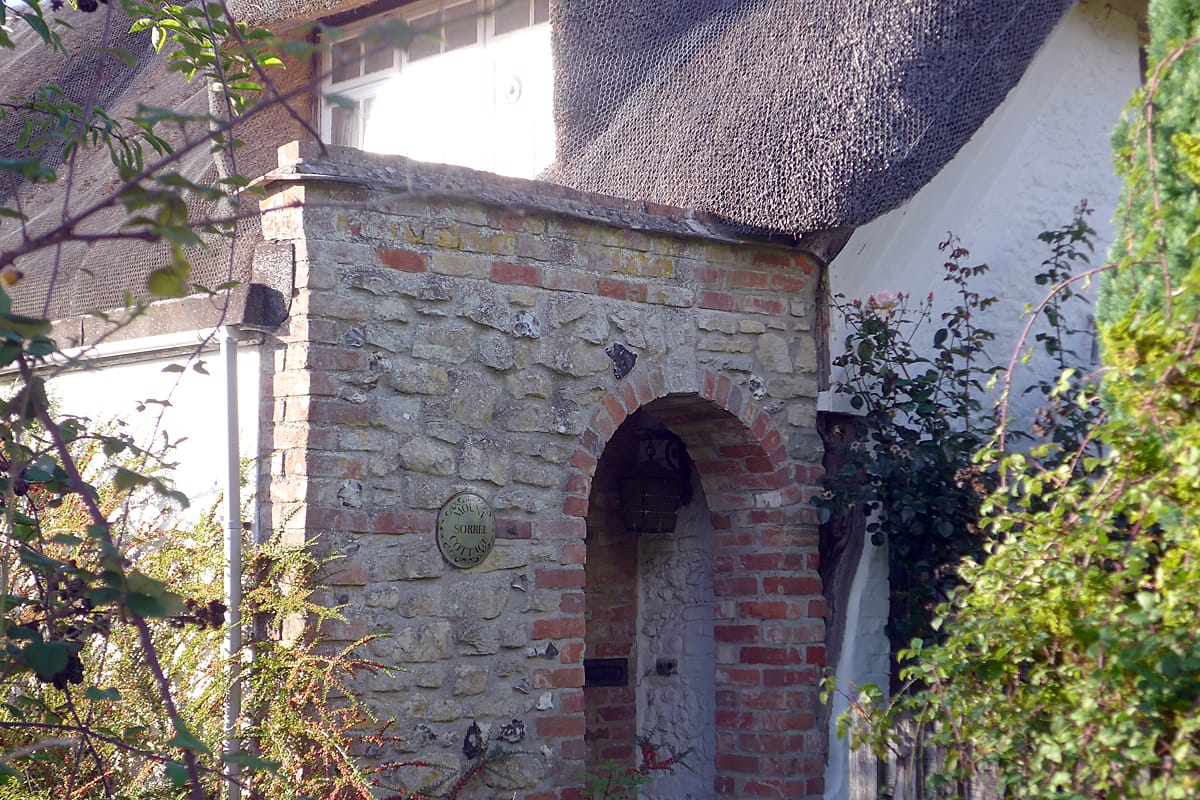
It is possible that Broad Chalke furnished Ford with the surname of the bewildered publisher in Ladies Whose Bright Eyes whom Ford had walk through this area.4
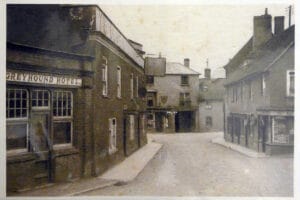
It didn’t take long for us to walk the full circuit of the village, passing pungent smelling watercress beds with red warning signs declaring that there ‘no public access’ to this ‘food production area’ and the local pub which, somewhat perversely for a place deep in rural Wiltshire was proudly promoting Fish and Chips on a roadside board. The pub gets positive reviews, to be fair, as does the community food shop located in the church. The food shop was well stocked with good, often local, produce at prices which hint at the relative affluence of the area. As we circled back to our borrowed home, we passed the Village Hall which hosts a monthly film night and was promoting its upcoming Harvest Supper.
If this all sounds like we had travelled back in time, much like Sorrell himself, to some untouched, isolated rural idyll, it is misleading. Good roads surround the village, and it takes less than twenty minutes to drive into the city of Salisbury, in whose Cathedral Violet Hunt claimed to have found the name of Sorrell’s love interest, Lady Dionissia, on a tablet “in the porch”.5 It is possible, even today, to walk from Broad Chalke to the City, though our own explorations were less ambitious and more focused.6
In the next article I will share what we learned from walking part of Sorrell’s route described in the novel, and a visit to Martin, home to Ford’s friend W. H. Hudson.
Click here for Part 2 of this series of articles…
All photographs by Andrew Gustar, reproduced with permission.
- Gillian Gustar, ‘The Journal of a PhD Student: Following in Ford’s Footsteps’, Last Post, Spring 2019, Vol. 1 No. 2 pp. 109-117 ↩︎
- Andrew Gustar, ‘Mr. Sorrell’s Castles’, Last Post, Spring & Autumn 2022 Vol.1 Nos. 8 & 9, pp. 20-38 ↩︎
- Ford Madox Ford, Return to Yesterday, (Manchester, UK, Carcanet Press Limited, 1999), p. 218 ↩︎
- See the Mr. Sorrell’s Castles article for a description and maps. ↩︎
- Violet Hunt, The Flurried Years, London, Hurst & Blackett. 1926. pp.101-102. ↩︎
- This blog post, for example, describes a walk from Salisbury to Broad Chalke, including some fantastic photos of the Wiltshire countryside. ↩︎