By Gillian Gustar
And finally… Fordingbridge
This is the last in a series of short blog articles based on a 2025 visit to the area of Wiltshire in which Ford set Ladies Whose Bright Eyes and part of The Good Soldier.1
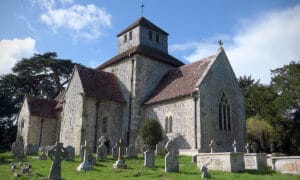
Fordingbridge, a small country town about ten miles south of Salisbury on the banks of the River Avon, features in both books. Ford borrows it as the location of the English home of Edward and Leonora Ashburnham in The Good Soldier; and Mr Sorrell spies the “church tower of a little village that he took to be near Fordingbridge” immediately before he first sees Dionissia Morane, the nurse credited with having “probably saved his life”.2
Ford is known to have visited Fordingbridge in 1904 in attempts to address nervous illness,3 and in 1910 with Violet Hunt who recalled it as a “dull quiet village”.4 It is an ungenerous comment about a place with a history which can be dated back to the Domesday book of 1086. It is today a popular tourist destination offering easy access to the New Forest national park and famed for an ancient seven arched bridge crossing the Avon (Bridge Street on the map below).
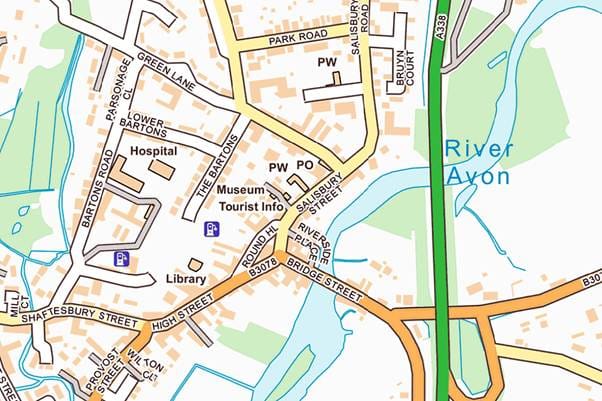
In fairness to Violet Hunt, when we visited for a few hours on an overcast September morning, it was not immediately obvious that we would find much of interest relating to Ford. For instance, the Greyhound Hotel, in which Ford stayed in 1904, no longer exists. On the map, the hotel was located on the corner of Salisbury Street and Riverside Place, with grounds running down to the river.
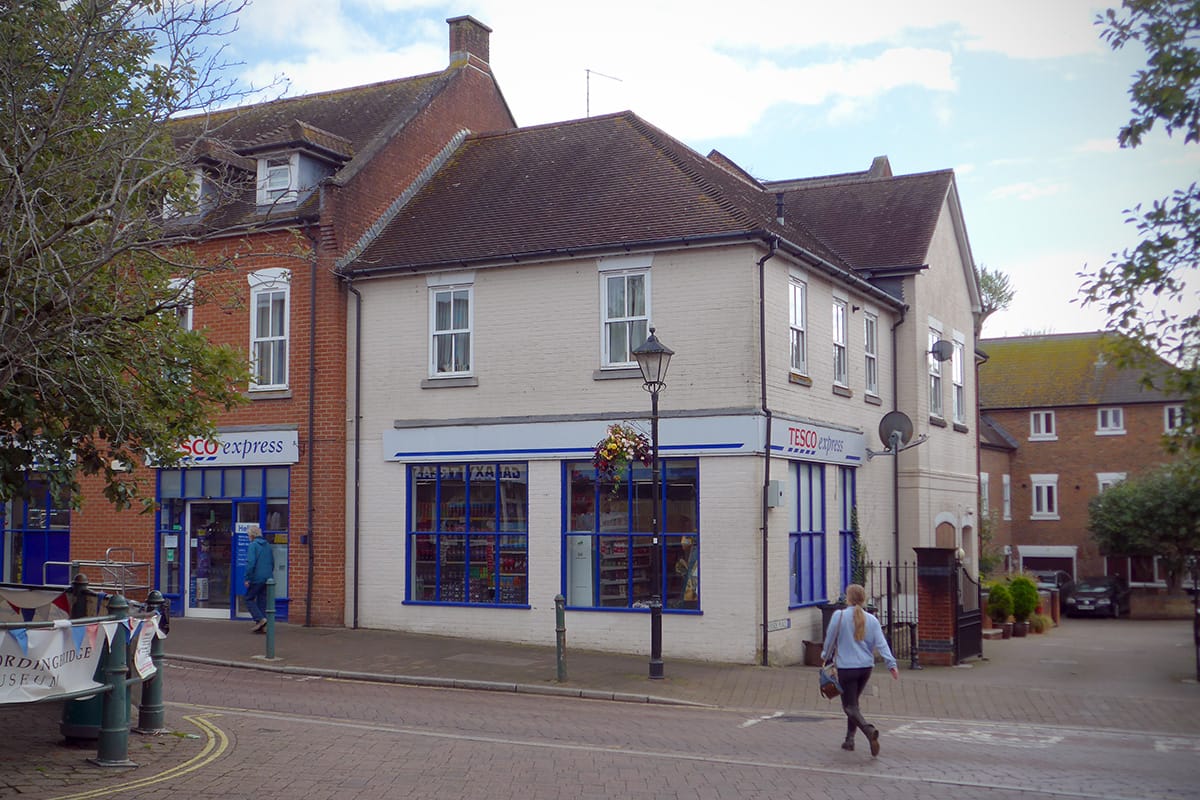
Today the Greyhound Hotel site houses a supermarket with some new houses behind it. It was a little dispiriting and difficult to get any real sense of how it might have appeared to Ford. A little more successful was viewing it from Bridge Street where it was at least possible to imagine how pleasant it might have been to sit by the river.
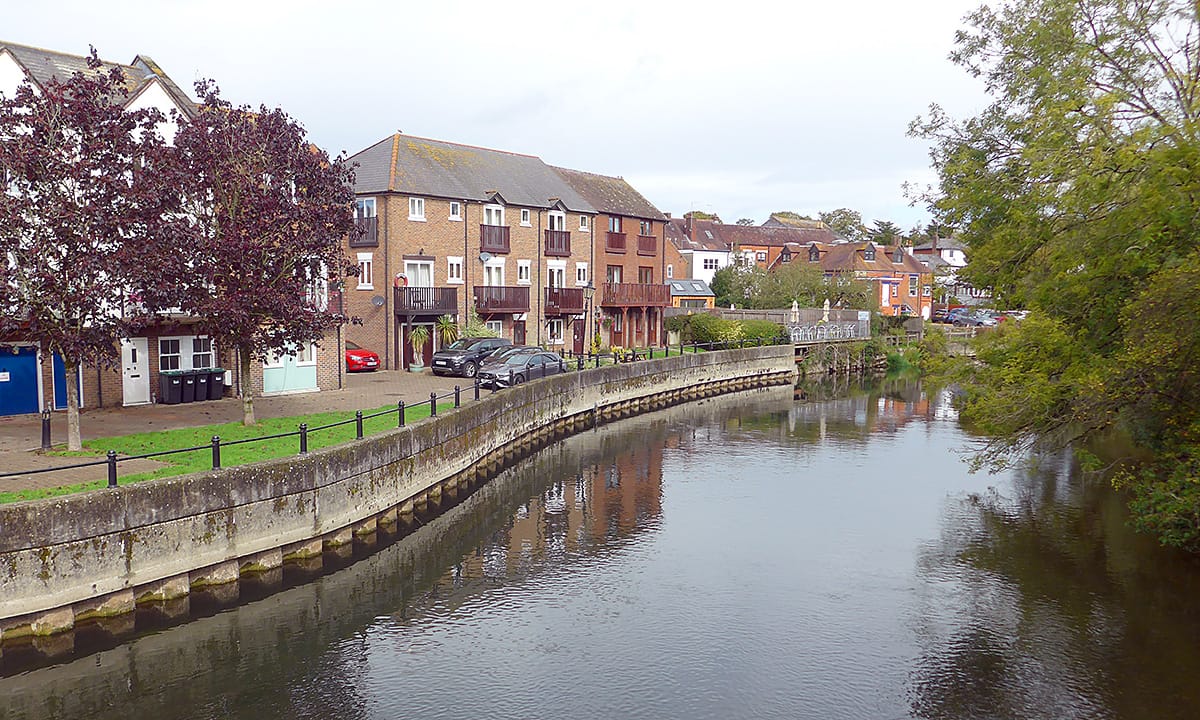
However, we were saved from having to rely only on the strength of our imagination. Just opposite the former hotel on Salisbury Street is the entrance to Fordingbridge museum. There we learned that the Greyhound Hotel had been a prominent inn of the town in its day with carriages conveying visitors from the train station (also no longer there). Even better, we were able to find a photograph of the hotel as it was, reproduced below.
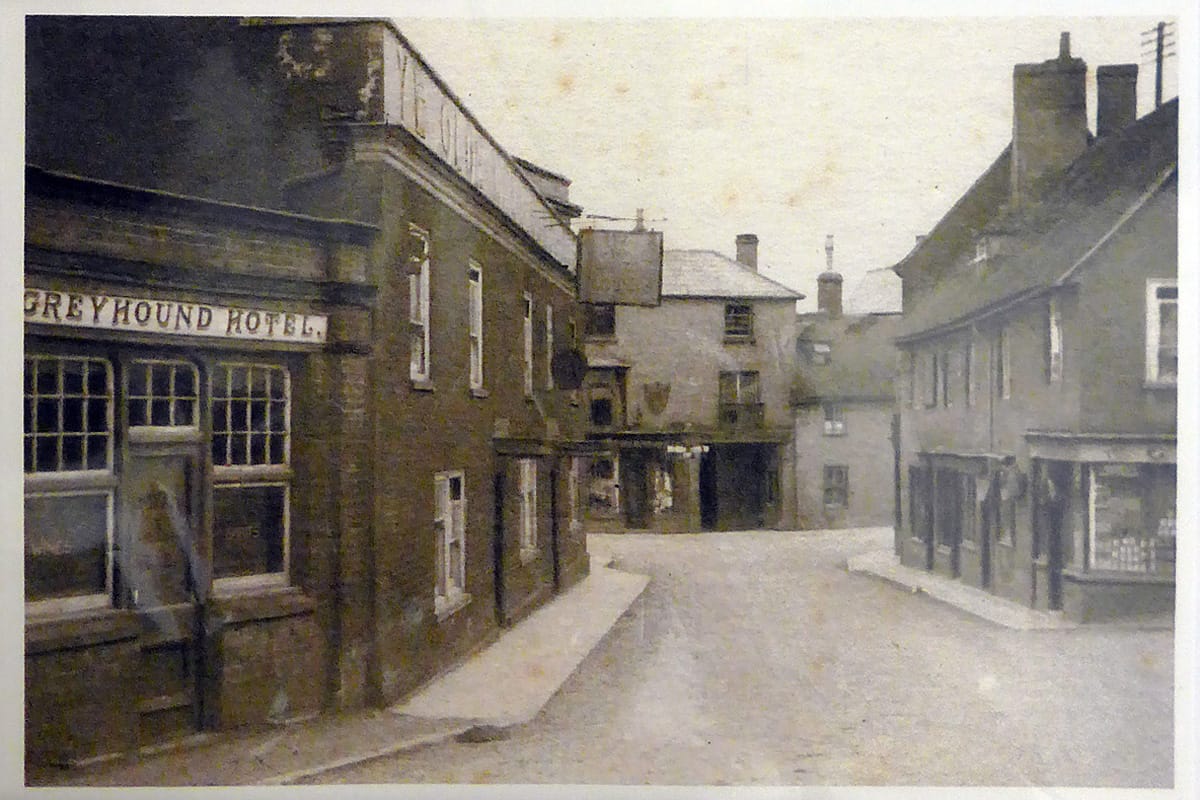
It looks a little austere but has a fascinating history dating back to the 1600s, summarised by the Museum’s Publicity and Outreach Officer, Julian Hewitt. To add to its chequered history, the son of the pub’s final owner before it was demolished in the late 1980s claims that it hosted Thomas Boulter, the Famous Flying Highwayman whilst on “a criminal escapade … circa 1774”. Given Ford’s love of the “penny dreadfuls” full of tales of highway robbers,5 he would probably have enjoyed this anecdote had it been passed on to him.
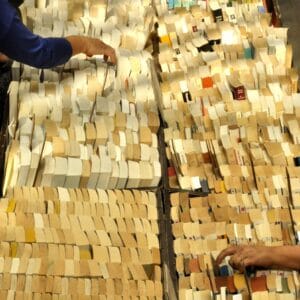
The museum itself, largely staffed by volunteers, is an impressive treasure trove of information and artefacts relating to Fordingbridge. It was quiet on the morning we visited so we were able to linger, undisturbed, over the files of text and photographs and displays ranging from household items to shop and pub artefacts, memorabilia from World War Two and an unexpected section on Ford’s contemporary, Augustus John, who lived there in his latter years.
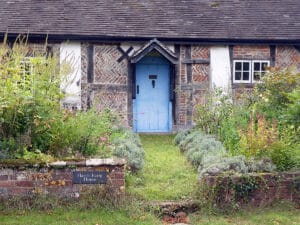
We left Fordingbridge with more of a sense of how the town might have looked when Ford visited, and an intention to browse its online archives. Before heading back to our rental home in Broad Chalke we took a detour to Setley, near Brockenhurst where Ford had lived at Yew Tree Cottage in 1904.6 There are several Yew Tree Cottages marked on old maps of the area, so we were unable to pin it down, but found compensation in the discovery of a lovely little vineyard with a café where we stopped for some lunch. We even succumbed to buying some of their surprisingly good wine. If I have ever given the impression in this blog series that this was essentially a work trip, this may correct it!
We were taking a holiday and doing some research along the way. Of course, research in any form is an uncertain process and doing it in person is no different. I might have liked to track down Yew Tree Cottage, or even to see the derelict Greyhound Hotel before its demolition, because as my previous research trip to Boppard showed,7 abandoned buildings can be evocative. As on other days though, what I discovered almost accidentally proved important. I had no idea of Augustus John’s connection to the area before I wandered into the museum intent on finding information about a hotel in which Ford happened to have stayed. Once I had seen the display devoted to John, it reminded me of how often small, local organisations can be pivotal. I had visited Germany in 2016 because a local civic group in Boppard had published a book about the Cold Water Cure institution which had treated Ford. This trip worked the other way round. Seeing the pride and interest in Martin’s connection with W.H. Hudson and of Fordingbridge’s with Augustus John, I was prompted to reflect that Ford’s imaginative use of the town and its surroundings in his novels creates a connection worth recognition. It is something I am following up with the museum.
It feels an appropriate conclusion to this final blog of the series. I hope that my posts have given a sense of some of the English locations in which Ford set his fiction and shown the value of researching ‘on foot,’ so to speak.
All photographs by Andrew Gustar, reproduced with permission.
- The previous articles in this series can be found here (1), here (2) and here (3). ↩︎
- Ford Madox Ford, Ladies Whose Bright Eyes (London: Constable, 1911), pp. 346 & 350 ↩︎
- Max Saunders, Ford Madox Ford: A Dual Life Vol 1, p. 307 ↩︎
- Violet Hunt, The Flurried Years, p. 101. It appears that Ford and Violet may have visited but not stayed at Fordingbridge in 1910. In the same passage, Violet mentions that “the Bell Inn was all right”. Although there was no Bell Inn in Fordingbridge, there was one (and still is) at Brook, about ten miles to the east, in the parish of Bramshaw. ↩︎
- Ford Madox Ford, Ancient Lights, p. 229 ↩︎
- Saunders, A Dual Life 1, p. 170 ↩︎
- See the description of Marienberg in Gillian Gustar, ‘The Journal of a PhD Student: Following in Ford’s Footsteps’, Last Post, Spring 2019, Vol. 1 No. 2 pp. 109-117 ↩︎