By Paul Skinner
More than once, I’ve conferred upon friends an extract from Guy Davenport’s essay, ‘The Critic as Artist’, with the wonderful lines: ‘The next time you have a fresh reading of Dorothy Sayers’ Lord Peter Wimsey canon of novels and stories in your head, along with the four volumes of Lévi-Strauss’ Mythologies, ask yourself what’s happening in those novels when food figures in the plot.’ Note ‘a fresh reading’; also ‘and stories’—you mustn’t skip Lord Peter Views the Body or Striding Folly—and, not least, the work of which Davenport had observed: ‘The four volumes of the Mythologies require dedication and stamina to read all 2,500 pages.’ Perhaps we should, just for the moment, leave aside Mythologies. Probably food too, Last Post 5, guest edited by Helen Chambers, having been devoted to just that theme.
In Ford Madox Ford’s New Poems, published by William Edwin Rudge in a limited, signed edition of 325 copies in January 1927, there is a piece entitled ‘Auprès de ma blonde’ with ‘[From the French]’ added below. It’s the second of ‘Two Poems in an Old Manner’. A popular song in France, sometimes adopted for military marches, it was composed very early in the 18th century, after the Franco-Dutch war of the 1670s, an alternative title being ‘Le Prisonnier de Hollande’: the woman sings in her father’s garden that her husband is imprisoned in that country.
Here is Lord Peter Wimsey, in Dorothy Sayers’ Busman’s Honeymoon, waiting for Doctor Craven to finish his examination of the body found in the cellar:
La caill’, la tourterelle
Et la joli’ perdrix —
Auprès de ma blonde
Qu’il fait bon, fait bon, fait bon,
Auprès de ma blonde—
‘The quail, the speckled partridge, the turtle fair to see’, Ford has there.
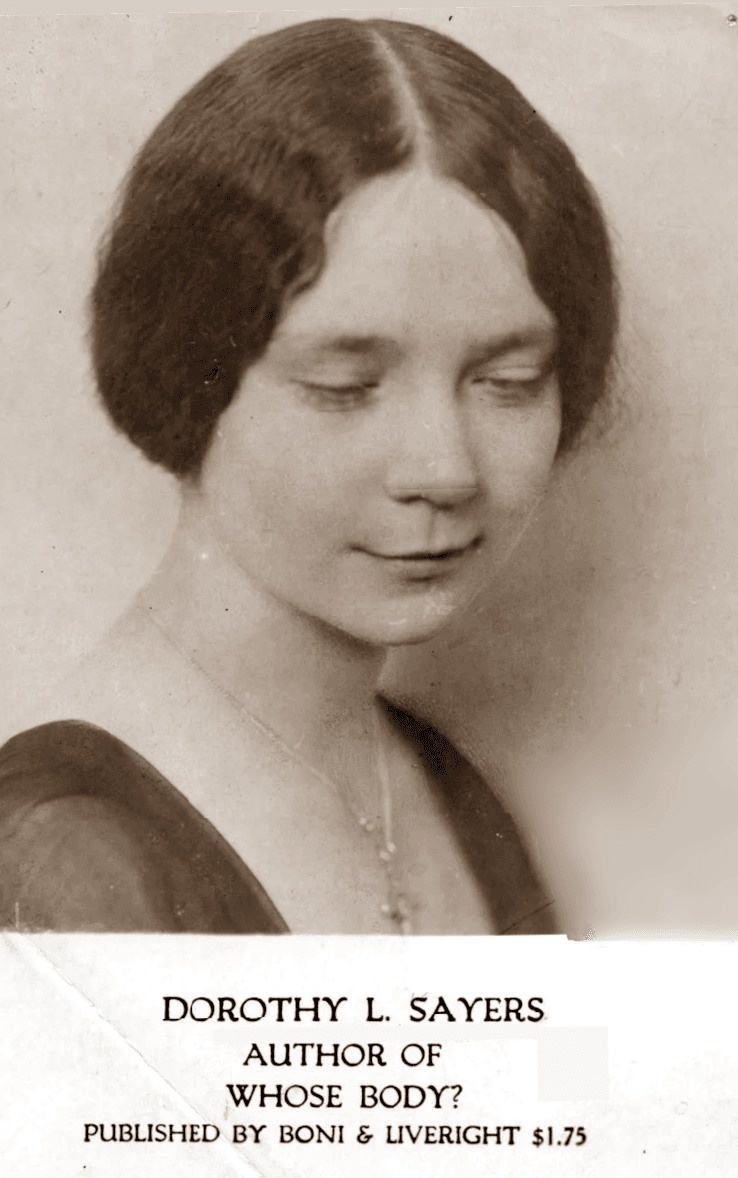
It is, after all, a popular song (though not at that precise juncture, being regarded as inappropriate: Bunter, Wimsey’s manservant, alerts him to the fact, darting ‘hastily across the room’ and attracting ‘the singer’s wandering attention’). Wimsey has also fought in France, of course, has been temporarily buried, has suffered severe shell shock, again not that uncommon. Still, it serves as a reminder that, for all the often artificial and, even more often, unconvincing lines of demarcation drawn between ‘modernist’ and ‘popular’ or ‘mainstream’, writers as varied as Ford and John Buchan or Edgar Jepson or, indeed, Dorothy L. Sayers, inhabit the same world, sometimes sharing the same literary, religious, cultural background, and similar points of reference. Not a matter of influence (or ‘the next time you have a fresh reading of Dorothy Sayers’ Lord Peter Wimsey canon of novels and stories—and the writings of Ford Madox Ford—in your head’)—more a case of a few pleasing details that may snag the attention of a Fordian reader, and some of those admittedly almost inevitable, given the period they both lived through in the early 20th century.
Sayers was born in 1893 and died in 1957 (on 17 December, Ford’s birthday). I recall no mention by Ford of Sayers and none of him in her writings. They seem to have had very few contacts in common, though Sayers was probably in touch with G. D. H. and Margaret Cole (who, politics apart, wrote detective novels together), while Ford certainly knew the writer and translator John Cournos, with whom Sayers had an (unconsummated) affair in 1921-2 and wished to marry.
Having recently looked at Ford’s letters and postcards from Corsica—his visit of 1928, 15 years after that with Violet Hunt—I was reminded of Wimsey’s having fled for three months to the wilds of Corsica, studying the vendetta in its natural haunt. ‘In such conditions murder seemed not only reasonable, but lovable’ (Clouds of Witness, 1926). In It Was the Nightingale, Ford recalls the time when he was in South Corsica, ‘stopping with a retired bandit, whose wife had once been engaged to Ruskin’.1 He commits the ‘unpardonable offence’ of sprinkling a lot of salt on the ragout he is served before even tasting it. The ex-fiancée reacts ‘as if I had questioned her virtue’, and Ford is uncomfortably aware that the septuagenarian ex-bandit is ‘said still to be very handy with his knife!’
‘Nothing much has been happening’, Sayers wrote to her friend Muriel Jaeger in July 1915, ‘except that my cousin from the front and my uncle from the front have each paid us a visit, with their respective wives. Both (the men, not the wives) have got nervous breakdowns, one has neuritis and the other has damaged his eye gazing at aeroplanes. Jolly business, war.’
The first Wimsey novel, Whose Body? (1923) includes Lord Peter’s nightmare about German sappers and several references to the shell shock he suffered in the war, while a necessary death (in terms of plot), occurring on Armistice Day, ensures that The Unpleasantness at the Bellona Club (1928) is also generously populated with references to shell shock, the effects of gas, violent deaths and war wounds.
Re ‘German sappers’, readers of A Man Could Stand Up— may recall Christopher Tietjens’ nightmare, one of them anyway: ‘he had found the sound of the pickaxes beneath his flea-bag almost unbearable. They were probably our own men. Obviously they were our own men. But it had not made much difference, for, of course, if they were there they would be an attraction, and the Germans might just as well be below them, countermining.’ And:
Fear possessed him!
He sat up in his flea-bag, dripping with icy sweat.
“By Jove, I’m for it!” he said. He imagined that his brain was going: he was mad and seeing himself go mad.
Re shell shock, needless to say, there are too many Fordian instances to reference comfortably: apart from Parade’s End (where they teem), see The Marsden Case, No Enemy, Great Trade Route, It Was the Nightingale, the short story ‘Enigma’. . .
In The Nine Tailors (1934), trying to decipher the postmark of a letter from France, Wimsey remarks: ‘The envelope bears a postmark which is only half-decipherable, but which I make out to be something ending in y in the department of either Marne or Seine-et-Marne – a district endeared to many by the recollection of mud, blood, shell-holes and trench-feet.’
In a letter to R. A. Scott-James in February 1925, from Guermantes près Lagny, Seine et Marne, where he and Stella Bowen then had a cottage, Ford wrote: ‘If you come over in the spring you must come down here. It is pleasant country of an insignificant sort, not far from Paris and just this side of the devastated zone.’ That term was generally applied to those areas, especially around the Somme, from which German forces retreated in the later years of the war, pursuing a policy of annihilation of any resource—railway lines, bridges, water supplies—of possible use to the advancing Allies.
In Sayers’ Gaudy Night (1935), Miss Schuster-Schlatt’s carrying the conversation ‘triumphantly away to the subject of her own work, which turned out to have something to do with the sterilisation of the unfit, and the encouragement of matrimony among the intelligentsia’, is an uncomfortable reminder of the eugenics movement which was so strong earlier in the century and which Ford touches on in Some Do Not. . . and The Critical Attitude.
In the same book, there is a suggestive exchange between Wimsey and Harriet Vane, to whom Peter says:
“That I should live to hear any person of English blood blaspheme against compromise!”
“Oh, I’m not all English. I’ve got some bits of Scotch and Irish tucked away somewhere.”
“That proves you’re English. No other race ever boasts of being mongrel. I’m quite offensively English myself, because I’m one-sixteenth French, besides all the usual nationalities. So that compromise is in my blood.”
This certainly recalls a number of statements by the author of The Spirit of the People: ‘that odd mixture of every kind of foreigner that is called the Anglo-Saxon race’ or ‘The author can claim to be a quite ordinary man, with the common tastes and that mixture in about equal parts of English, Celtic and Teutonic bloods that goes to make up the usual Anglo-Saxon of these islands’, or ‘an Englishman who had not more than a few drops of really English blood in my veins’.

As for literary tastes: while Harriet is reading Thomas Browne (to whom Ford gives a passing but admiring nod in The March of Literature), Lord Peter’s tastes are ‘fairly catholic. It might easily have been Kai Lung or Alice in Wonderland or Machiavelli’ (and Harriet suggests John Donne). She asks Wimsey if he finds it easy to get drunk on words. ‘So easy that, to tell you the truth, I am seldom perfectly sober. Which accounts for my talking so much.’
Thomas Cromwell gives Lascelles his own annotated copy of Machiavelli’s Il Principe in Privy Seal (“I am a simple man, yet hath it made me”), and the first part of Thus to Revisit is prefaced by a chunk of a Machiavelli letter (probably taken from the first volume of John Addington Symonds’ Renaissance in Italy). Ernest Bramah’s The Wallet of Kai Lung (1900) was almost certainly the source of Ford’s ‘Chinese proverb’ (cited more than a dozen times) about it being hypocrisy or a sign of insincerity of purpose to look for the Sacred Emperor in a low class tea-house. The definite or plausible references in Ford’s writings to Lewis Carroll’s Alice books are like stars in the night sky: the longer you look, the more become visible.
Later, Harriet takes Wimsey into a university meeting: ‘he was ready for mischief as a wilderness of monkeys.’ This is a wave to Shakespeare’s Merchant of Venice (and perhaps to Edward Fitzgerald, among others), and Ford also employs it, in a 1920 letter to Herbert Read, in Thus to Revisit (‘all the wilderness of apes a-chatter’), in the ‘Chroniques’ column in the Transatlantic Review, and in Portraits From Life. Lastly, and hardly obscurely in the present context, Wimsey says at one point: ‘But when blood is their argument, all argument is apt to be – merely bloody.’
As it is, alas.
[Postscript: I was reminded by Garrett Bruen (Savannah College of Art and Design), who recently gave a paper on Ford’s 1911 short story ‘Riesenberg’ at the Weird Modernisms conference at Loughborough University (see Gill Gustar’s report on the conference) that there is one direct link of a kind between these two writers. ‘Riesenberg’ was included in Great Short Stories of Detection, Mystery and Horror: Second Series (Gollancz, 1931), pp.752-777, one of three very successful anthologies that Sayers edited.]
- A query for another occasion. To the best of my knowledge, neither Effie Gray, who went on to marry John Everett Millais after her marriage to Ruskin was annulled, nor Adèle Domecq, who married the wealthy Baron Duquesne (and was never engaged to Ruskin anyway), later wed active or retired bandits. Perhaps the ‘great deal of salt’ which Ford sprinkled on his meal should also be applied to his story. . . ↩︎