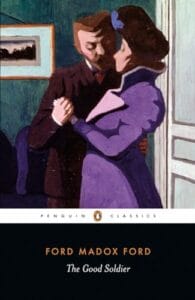
Members of the Ford Society are often asked, “What should I read after The Good Soldier and Parade’s End?”
There is no consensus. Instead, out of the fifty-plus options, here are some recommendations from avid readers of Ford…
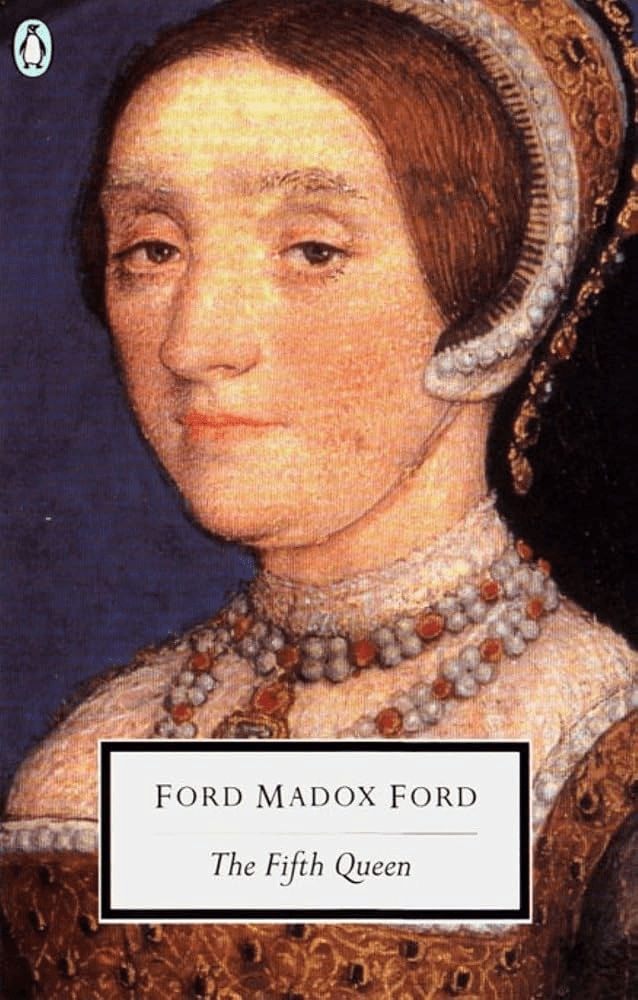
Seamus O’Malley, Chairman of the Ford Society, author of Making History New: Modernism and Historical Narrative:
I would recommend Ford’s Edwardian-era historical trilogy The Fifth Queen (1906-1910). It dramatizes the life of Katharine Howard, Henry VIII’s fifth wife (divorced – behead – died – divorced – beheaded) whom Ford squares off against the scheming Thomas Cromwell, now everyone’s favorite Tudor statesman in the wake of Hilary Mantel’s own trilogy of the era. Instead of the subjective, impressionistic worlds that Ford would go on to generate in his most canonical works, The Fifth Queen renders Henry’s court via a series of aestheticized tableaus (Ford had just finished a monograph on Holbein) that immerse the reader in sensuous prose. If you need extra enticing, know that Joseph Conrad called it the “swan song of Historical Romance.”
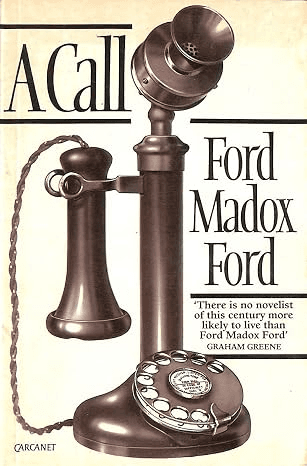
Max Saunders, who liked Ford’s biography so much he wrote it twice . . .
A Call: The Tale of Two Passions is actually about at least four main characters having passions for more than one person. The other main character, Katya, who only wants one person, wants to live with him unmarried because her parents did. She also has to be one of the first psychotherapists in literature. All this in 1910. But it is what Ford does with the telephone that is equally extraordinary. He really got how phones – then still a luxury – would change our sense of space, of social life, of conversation, of intimacy, of psychology. It’s time to revisit this ingenious book in our era of AI-enabled mobile phones.
Paul Skinner, editor of, yes, No Enemy:
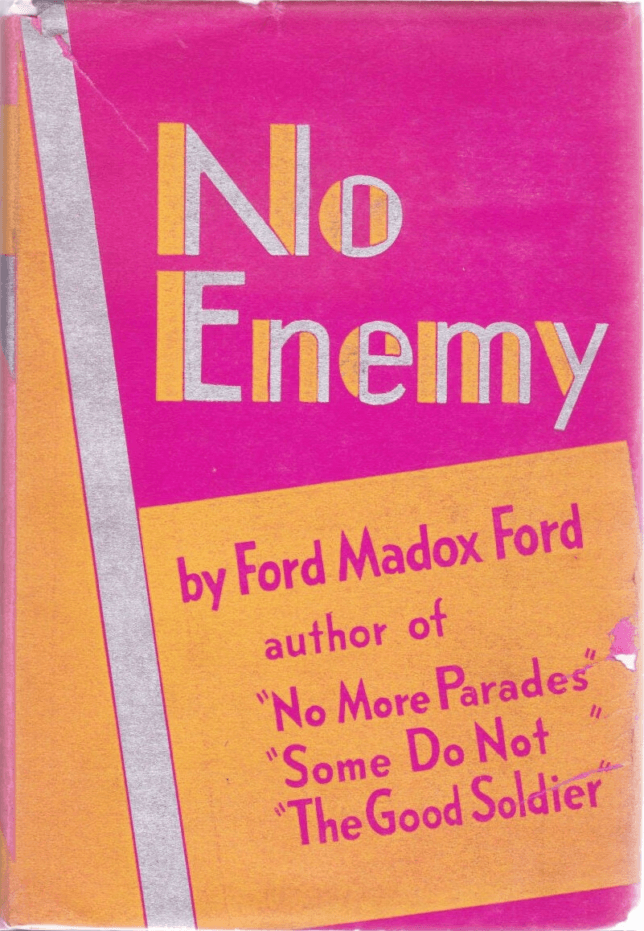
No Enemy: A Tale of Reconstruction began in 1919 as a series of articles called ‘English Country’. When it was published as a book ten years later, the first reviewers, like the scholars who have discussed it since—and Ford himself—were unsure whether to call it fiction, autobiography or fictionalised memoir. One narrator had become two: ‘the Compiler’, who provides the wider frame, and Gringoire, the poet and subject of the Compiler’s narration, who is permitted to speak in his own voice for the second half of the book. Moving between an English cottage and wartime France, prompted by the memory of several landscapes and taking in cookery, reading, ferrets and cricket, the book’s central theme is indicated in that subtitle: the reconstruction of a writer after war. It is the only extended account of Ford’s war presented in his own voice, in fictional disguise, yes, but in the recognisable authorial tones of the 1930s autobiographies.
Gill Gustar, bookworm and Ford follower:
My suggestion would be Mr. Apollo, a novel in which the Greek god Apollo sails down through the night air into Anglesey Square, London, and is arrested by a confounded local constable. The constable is the first of many characters who, despite the evidence of their own senses, cannot bring themselves to believe that Apollo truly is the god he claims to be. Set in a time when paranormal experiences or beliefs were pathologized, it would have been a brave person who accepted Apollo’s claims as fact, and much of the novel’s humour lies in the attempts of characters to explain him in determinedly materialist terms. The novel surfaces questions about the limits of the dominance of scientific rationalism which resonate today. My own penchant for the novel, however, rests on the brilliant final irony that whilst Ford’s characters can’t suspend their disbelief and accept Apollo’s visit as real, his readers do. At least for the duration of the novel.
Helen Chambers, co-editor of Ford’s Collected Letters volumes 1 and 4:

The Inheritors: An Extravagant Story, Ford and Conrad’s first published collaboration, 125 years ago, was almost entirely written by the relatively youthful Ford, with some stylistic ‘final taps’ from the mature Conrad. The novel is a striking example of early impressionism with a very prominent painterly sense of light and colour in both exterior and interior settings, from the first chapter onwards. But it also has, in 2026, a very contemporary feel. There is a scheme by a mad-sounding leader with corrupt corporate backing to take over a resource-rich territory which Ford labels ‘Greenland’ with a resulting political leadership crisis; a mass-circulation newspaper determining public opinion; linked to both these is a bestselling author’s celebrity cult. There is the pervasive threat of an alien invasion, revealed to Ford’s increasingly bedazzled narrator by its ambassador, a beautiful almost disembodied young woman. Her answers to his questions, which Ford described as resembling a phonograph, now sound like a sophisticated but heartless chatbot. There are also strong Fordian autobiographical elements including the narrator’s agoraphobia and his anxiety about his future as a writer. As well as King Leopold II and rival British political leaders of the time Arthur Balfour and Joseph Chamberlain, there are recognisable portraits, some warm, some tepid, of family, friends and acquaintances. These include Ford Madox Brown, Edward Garnett, Conrad himself, T. Fisher Unwin, Alfred Harmsworth and Hall Caine, this last with physical and vocal hints of Henry James.
Andrew Gustar, keeper of the Society’s website:
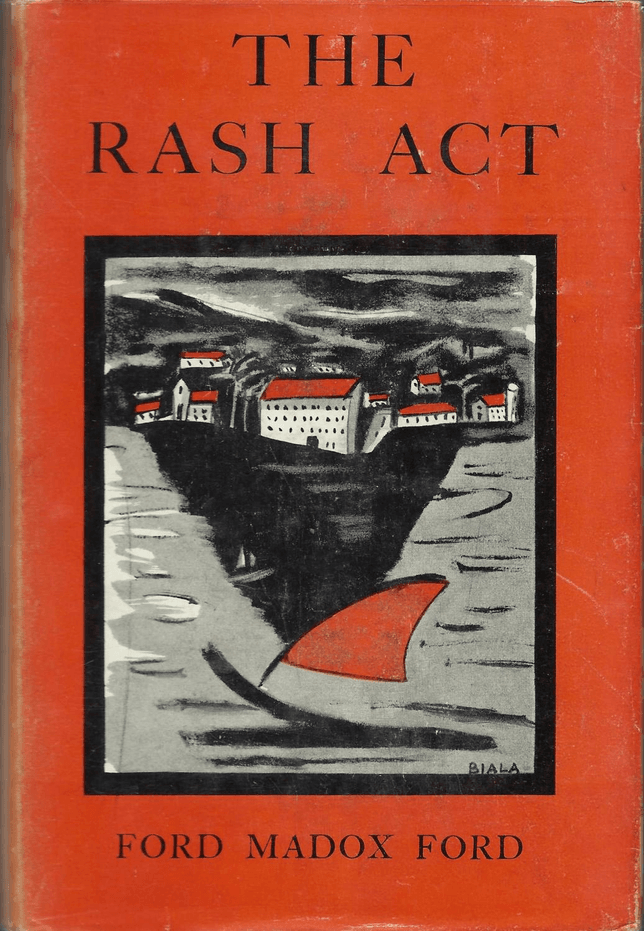
As a statistician, I thought I should see what the data suggests as a next read. Among Ford’s other novels with more than 10 ratings on goodreads.com, the highest scoring is The Rash Act. I can confirm that this is indeed an enjoyable and gripping tale, especially when followed by its sequel Henry for Hugh. They are late novels, published in 1933-34 when Ford was living in Toulon, in the south of France, close to where The Rash Act is set. The story takes place during the Great Depression, and follows a broke, desperate American whose chance encounter with his wealthy English double sparks a daring identity swap. Henry, the protagonist, is a compelling character, and Ford’s impressionistic style captures well the psychological impact of financial ruin in a way that still feels fresh. Henry for Hugh goes on to provide a satisfying resolution to the situation set up by the “rash act” of the first book.