By Gillian Gustar
Any conference offering around 120 panels, round tables and workshops over four days, not to mention three keynote speeches, 26 seminars and lunchtime and evening activities, was always going to be tricky to navigate. Add in over 450 participants moving between two conference venues and the potential for chaos was high. To the credit of the co-hosts, the Modernist Studies Association (MSA) and the British Association for Modernist Studies (BAMS), the logistics of the Weird Modernisms conference at Loughborough University were beautifully handled. The provision of a comprehensive programme in advance allowed me to arrive with my own schedule already decided. Obviously, my selected pathway through such a large conference means that the report which follows cannot claim to be representative, but I hope to give you a flavour of it and to highlight topics relating to Ford.
The aim of the Conference was to ‘celebrate the works and study of Modernism as strange, queer, uncanny, occult, and above all weird.’ It had, as you might expect, some of its own strangeness. I was struck by the juxtaposition of the theme and the, for the most part, highly conventional format. It would be misleading to suggest that there was no attempt to align theme and form because the conference offered a range of experiential activities, some within the body of the conference sessions. Others were woven through lunchtimes and evenings, such as a writing workshop based on sculptures around the campus; a craft workshop using assemblage techniques to reimagine campus trash/found objects; a ‘ballet stochastique’ – a weird modernist soundscape; and films, one of which warned of slaughterhouse scenes. It is an approach which demonstrates the sheer breadth of the way in which the conference theme was interpreted.
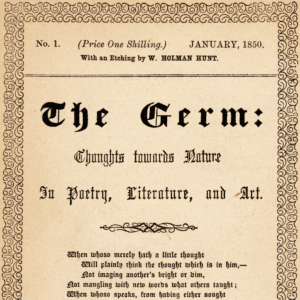
I attended mostly panels and roundtable discussions and was occasionally left with the sense that a talk had been slightly shifted on its axis to give a nod to the conference theme. The majority, however, offered exciting ways of staying close to the agenda and resulted in rich discussions. The Ford Society’s own panel, ‘A Weird Little Magazine: Strange Tales from the English Review’, is a good example. Garrett Bruen offered a fascinating reading of the short story Riesenberg (1911), set in a sanitorium which is located in a valley which acts as the site of ‘weird’. Characters fear for their sanity when seeing primordial giants, whose size makes them both human and not human, and therefore monsters. In Bruen’s reading, the giants function as the borderline between reality and illusion, between madness and sanity, and raise interesting questions about the connection with Ford’s own fear of insanity and his experiences of the ‘monstrous institution that had tortured’ him during his 1904 breakdown. Julia Fernelius argued persuasively that the narrative about Violet Hunt herself has led to her literary contribution being undervalued. She highlighted the way in which the use of gothic tropes in ‘governess’ novels such as Unkist Unkind (1897) paved the way for the Tales of the Uneasy collections in 1911 and 1925. Amongst her most popular works, they sparked new interest in the modernist ghost story. A final presentation from Alexander Scott focused on the more overtly avant garde Wyndham Lewis, drawing attention to the publication of ‘Les Saltimbanques’ (The Acrobats) in The English Review in 1909 as the point at which Lewis named himself a writer. His exploration and satirization of the relationship between circus performers and their audience, later revised in line with his vorticist philosophy and included in his 1927 collection, The Wild Body, as ‘The Cornac and His Wife’, neatly rounded out how Ford’s openness to the new made The English Review a ‘weird’ publication.
Similarly, Max Saunders’ presentation as part of a Future Thinking panel explored not only the ‘weird’ prescience of the To-day and To-morrow series of books (1923 to 1931) but the way in which its sheer eclecticism facilitates odd juxtapositions. One instance illustrates this well: Vera Brittain’s Halcyon; or, the Future of Monogamy essentially envisages a familiar but better future, whilst visionary scientist J. D. Bernal, in The World, the Flesh and the Devil, anticipated a world in which humans would overcome biological limitations by integrating with machines to form telepathic networks which allow them to communicate with the minds of the living and dead. Resonances with the shift towards Artificial Intelligence are themselves uncanny. A tantalising glimpse into Max’s new book on the series can be found here. The Future Thinking panel, which included papers by Alex Bickley Trott on ‘John McHale and the Human Image at the Dawn of the Information Age’ and Lottie Minney on ‘Weird Utopia in Ezra Pound’s Pisan Cantos‘ provoked interesting questions about the mind’s ability to imagine a different world, much as a fiction writer does, and the extent to which such ideas can be dismissed as ‘weird’ if they do not fit an existing narrative.
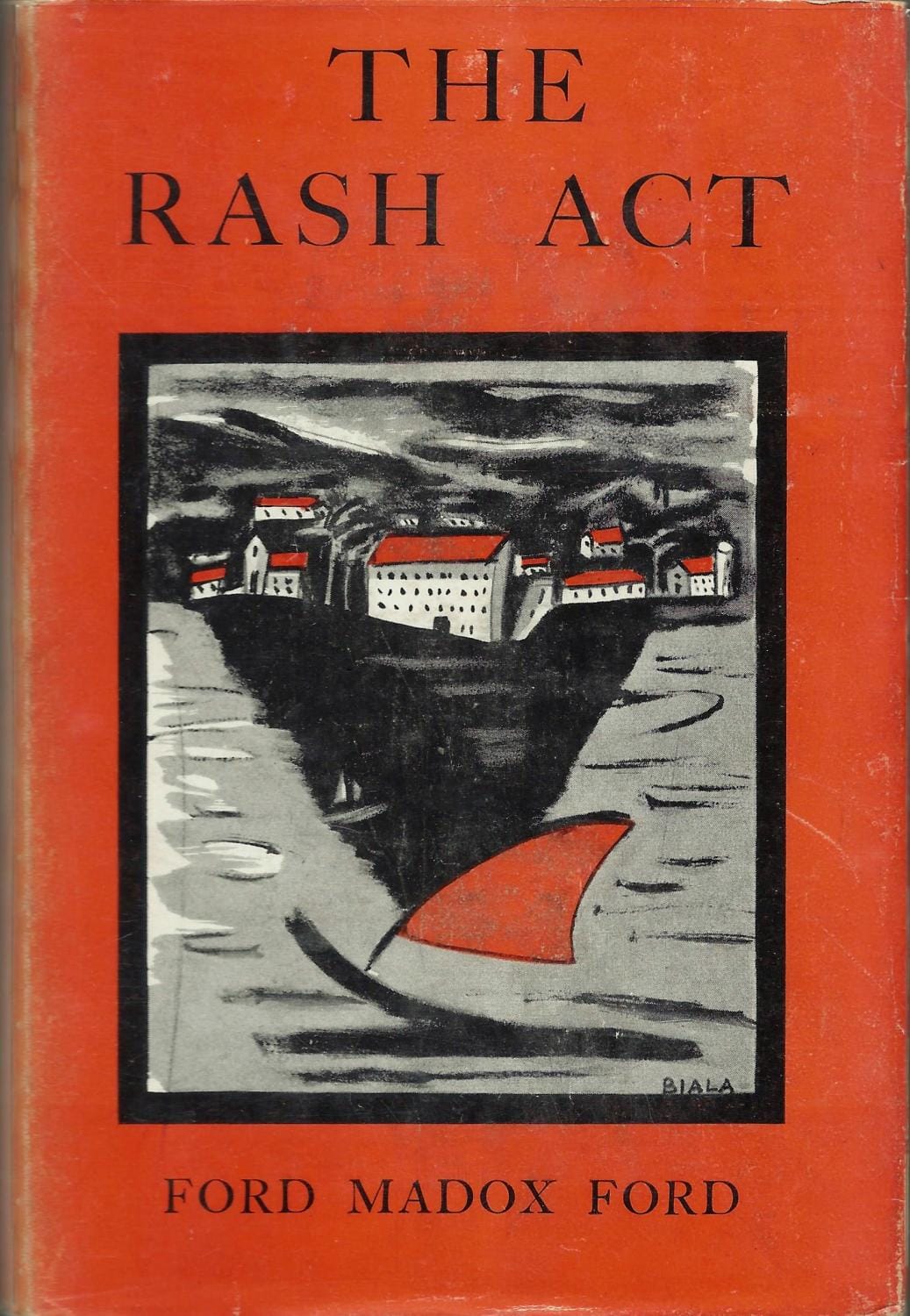
I am trying here to show a through-line I perceived in the presentations: a tension between ‘what is’ and ‘what if’, between the concretely real and the imaginary, between what might be termed ‘normal’ or ‘mainstream’ and that described as ‘strange’ or ‘weird’. It shows up again in a paper contributed by Rob Hawkes to a panel on Weird Epistemologies in which he considered issues of money and trust in F. Scott Fitzgerald’s The Great Gatsby (1925), Nella Larsen’s Passing (1929) and Ford’s The Rash Act (1933). All three novels rest on the assumption by key characters of fraudulent identities where money is implicated, and raise questions about trust and trickery. Or again, between what is real and what not.
In choosing to foreground the panels that feature Ford, I run the risk of implying that his presence was a bigger part of the conference than it was. In fact, all of the above papers were in only 3 of the 120 panels and were by people connected to Ford’s work. However, there was one outlier I found interesting and encouraging. In a panel on Weird Legacies and Historical Echoes, Bonnie Pang from Washington University, St Louis considered Ford’s The Fifth Queen trilogy against Hilary Mantel’s Wolf Hall trilogy. She discussed the difficulty of creating characters from real historical figures, and the ‘weird’ inaccuracies which creep in. Ford clearly played fast and loose with the facts about Catherine whilst Mantel’s renowned meticulousness for historical fact makes them strange comparators. Yet Pang found a commonality in the way they use minor characters (Throckmorton by Ford and Christophe by Mantel) to emphasise the way in which their main character is ‘out of time,’ ill-suited to it. The minor characters are used to effect an escape of some form. Apart from reinforcing that the combination of ‘weird’ and Ford seems to have something to do with the tensions between the known and the imagined, and that ideas might or might not fit a time, Pang’s paper is notable for its implicit invitation to read more of Ford’s novels against those of our own time.
Moving out from Ford-related papers, it is worth noting that there were essentially five streams running across the conference: Modernism and Environment, Modernism and Film, Modernism and Pedagogy, Intersectional Feminist and Queer Praxis, and Weird Modernisms. In a ‘Weird Ecofeminisms’ session I heard papers covering Celtic folklore and its relationship to modernist primitivism, Zora Neal Hurston’s late modernist Tell My Horse (1938) and the significance of adulterated milk in Sylvia Townsend Warner’s Lolly Willowes (1926). I hadn’t expected a strand which is so far from my own work to suggest associations but, in fact, the last paper offered connections with Ford’s experiences of the ‘milk cure’ which formed part of his treatment in European spas in 1904 which I may follow up.
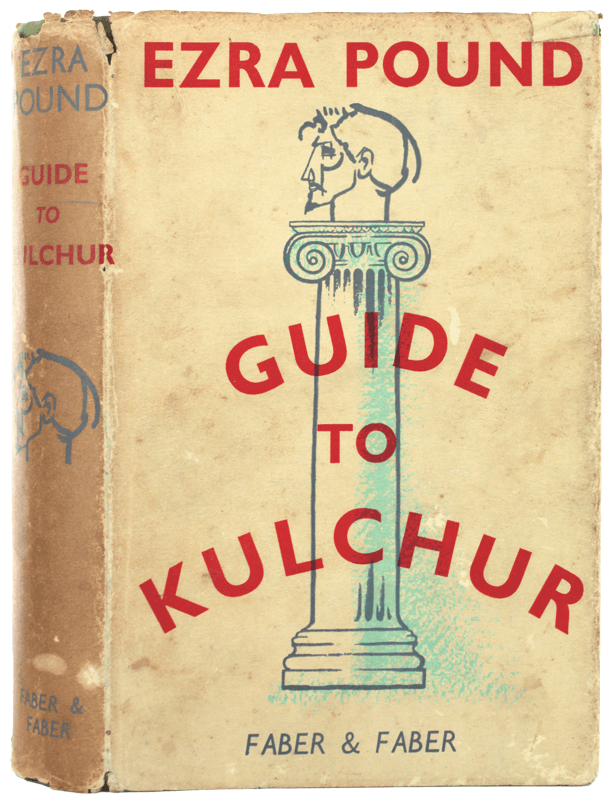
Similarly, I attended a panel entitled Weird Personae & Weird Visions specifically to hear a paper by Andrew Gaedtke from the University of Illinois Urbana-Champaign on ‘Modernism and the Neurological Uncanny’ but found that other papers provoked new thinking too. Gaedtke’s paper was concerned with contemporary literary engagement with the brain sciences influenced, he argues, by the biological turn in psychiatry. He argued for modern novels reactivating modernist techniques to consider neurological issues. For me, there were many resonances with my research into Ford’s treatment for nervous illness which I intend to revisit against some of Gaedtke’s work which is new to me and was a valuable piece of learning from the conference. More surprisingly, finding that Dorka Tamás’ examination of how Sylvia Plath’s beekeeping and the poems it inspired had coded within them witchcraft, satanism and magic led me to wonder what, beyond Ford’s witch-like women, might be written into his novels. Then, again tangentially, a paper on ‘Vision and Visitation in Pound’s A Draft of XVI Cantos‘ cited him as writing in Guide to Kulchur (1938) that the indifferent ‘cold historian may leave a more accurate account of what happens, but he will never understand WHY it happens.’ This feels far too close to Ford’s own distinction between ‘scientific’ historians concerned with impartial evidence and ‘literary’ historians, who eschew impersonality in favour of giving the ‘savour of the life’, to be unconnected.
I found this to be a key theme of the conference, that modernist creators of literature, art and music were not in some kind of sealed vacuum. Their work relied on their engagement with each other and with the ‘modern’ world which was unfolding around them. As does ours, a point compellingly made by Dr. Nisha Ramayya from Queen Mary University in her Keynote Speech.
Ramayya’s creative-critical presentation began with an exploration of H.D.’s visionary novel Majic Ring, and the engagement with séances which led to her belief that she heard from dead RAF pilots during Second World War air raids. So far, so weird. But, for Ramayya that context of war, and the mourning it provoked, created new ways of knowing and unknowing. It is impossible to do justice to the richly textured argument that Ramayya made in beautifully written prose in this report. However, I can at least highlight the key questions she raised about the role of poet and poetry in a world of aggression and violence. How might peace be visualised? What could poetry do? And what is the role of the reader in relation to it? She wove mysticism and materiality into a rich narrative to argue that there is no such thing as ‘off grid,’ that we are entangled, porous and implicated in world events. They might not touch us directly, but they change our understanding of our place in the world. My own response was to hear her talk as a call not to turn a blind eye, become cynical or disillusioned, but to retain agency and the desire to use it – in our work and with each other.
In one of those ‘weird’ collisions, the conference itself underpinned her argument. It was a conference full of goodwill and positive energy, with supportively framed questions to presenters and genuine interest shown in other people’s research interests in informal conversations over coffee or lunch. One recurring conversation was the trend for disproportionate staff reductions and redundancies in arts and humanities faculties of universities. The general tenor of the discussion was that this represented a threat not only to those directly or immediately affected, but to the discipline as a whole. In one particularly heartening moment, a participant in a session for students and Early Career Researchers asked not only what could be done in universities but how, as individuals, we could help. Whether collective action would make a difference seemed to me less important than the willingness to assume some agency, much as Ramayya had advocated.
I am sure that the conference organisers will have their own ways of measuring its success. For me, it was quite simple. It challenged me, ignited ideas and gave me a rare opportunity to talk to other researchers. It felt well worth the time and financial investment it had required. Even writing this report has been useful in that it consolidated some of my thinking. It is unapologetically a selective, personal and subjective report. I hope Ford might have approved and that you found interest and value in reading it.
Gillian Gustar, July 2026